

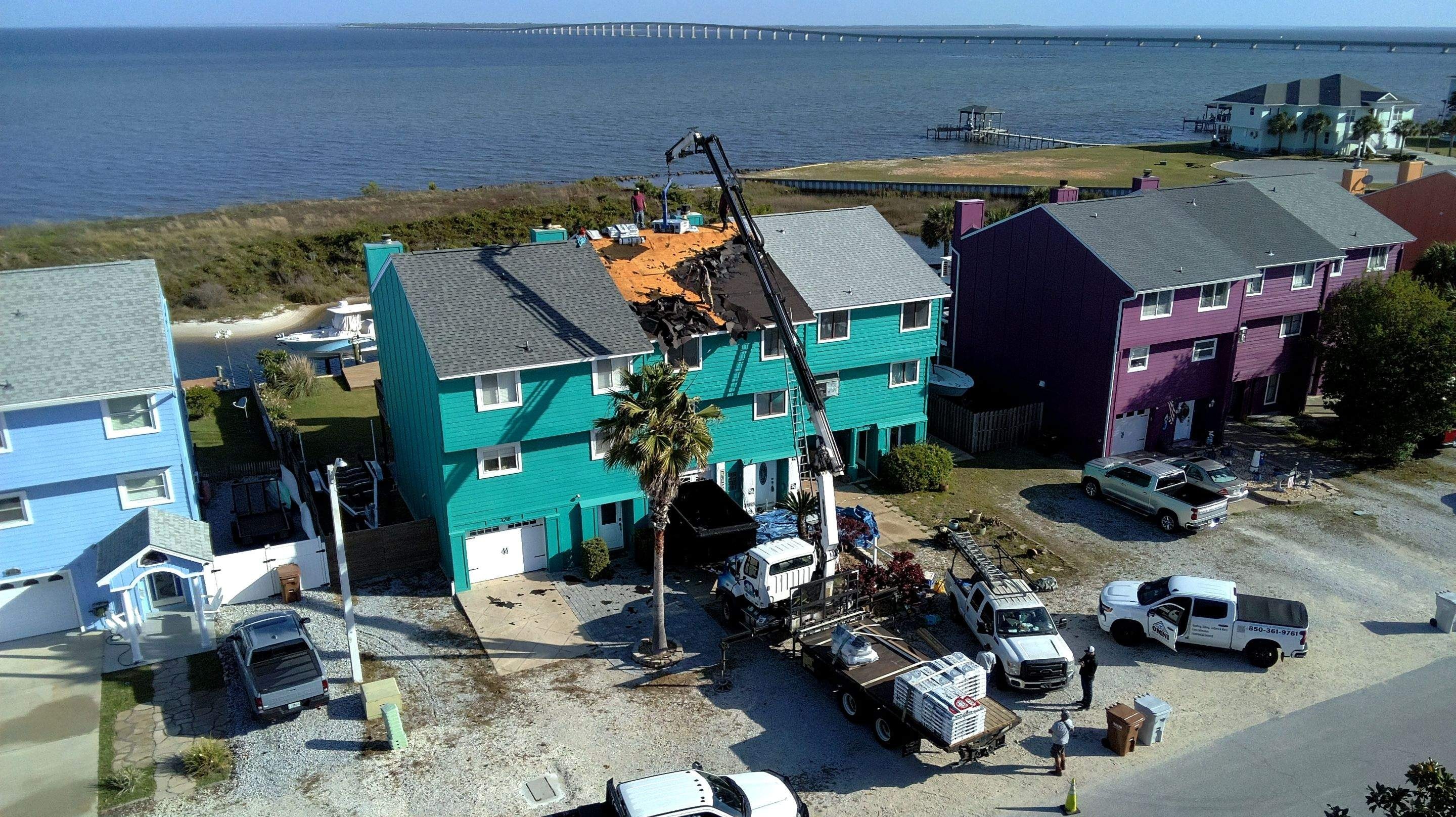
Full re-roof
Four decisions shape a roof replacement before the covering goes on
The covering is the part everyone shops on. What decides how the roof performs is the work underneath it: the deck, the underlayment, the flashing and the ventilation.
- Scope covers
- Tear-off, deck inspection and repair, underlayment, flashing at every wall and penetration, ventilation, then the covering.
- Put in writing
- How deck damage is handled, which underlayment, whether flashing is replaced or reused, and what permitting is included.
- Permitting
- Confirmed for your address before the scope is final. Escambia, Santa Rosa and Okaloosa each administer their own.
Where quotes diverge
Two quotes for 'a new roof' can describe very different work
When people compare roofing quotes, they compare the covering and the price, because those are the two things every quote states clearly. The differences that matter are usually in what is not stated.
Flashing at walls, valleys and penetrations: reused or replaced. Ventilation: assessed or ignored. Deck repair: how it is priced, and whether you find out before or after. Underlayment: which one, and how it is fastened. Disposal and permits: included or added later.
Ask any roofer to put those five in writing. It is a fair question, and the answers will tell you more than the headline number does. They do not change whether the roof replacement is on a home or a commercial building. Only the systems under discussion do.
What a roof is
Six things make a roof. Most quotes itemize one.
A roof is an assembly, and the parts that decide whether it performs are the ones you never see again once the job is finished. This is what we walk through before any number is attached to it.
Section drawing, not to scale. Layer make-up varies by roofing system and by what the building already has.
- RaftersThe structure. What it can carry decides whether tile is even an option.
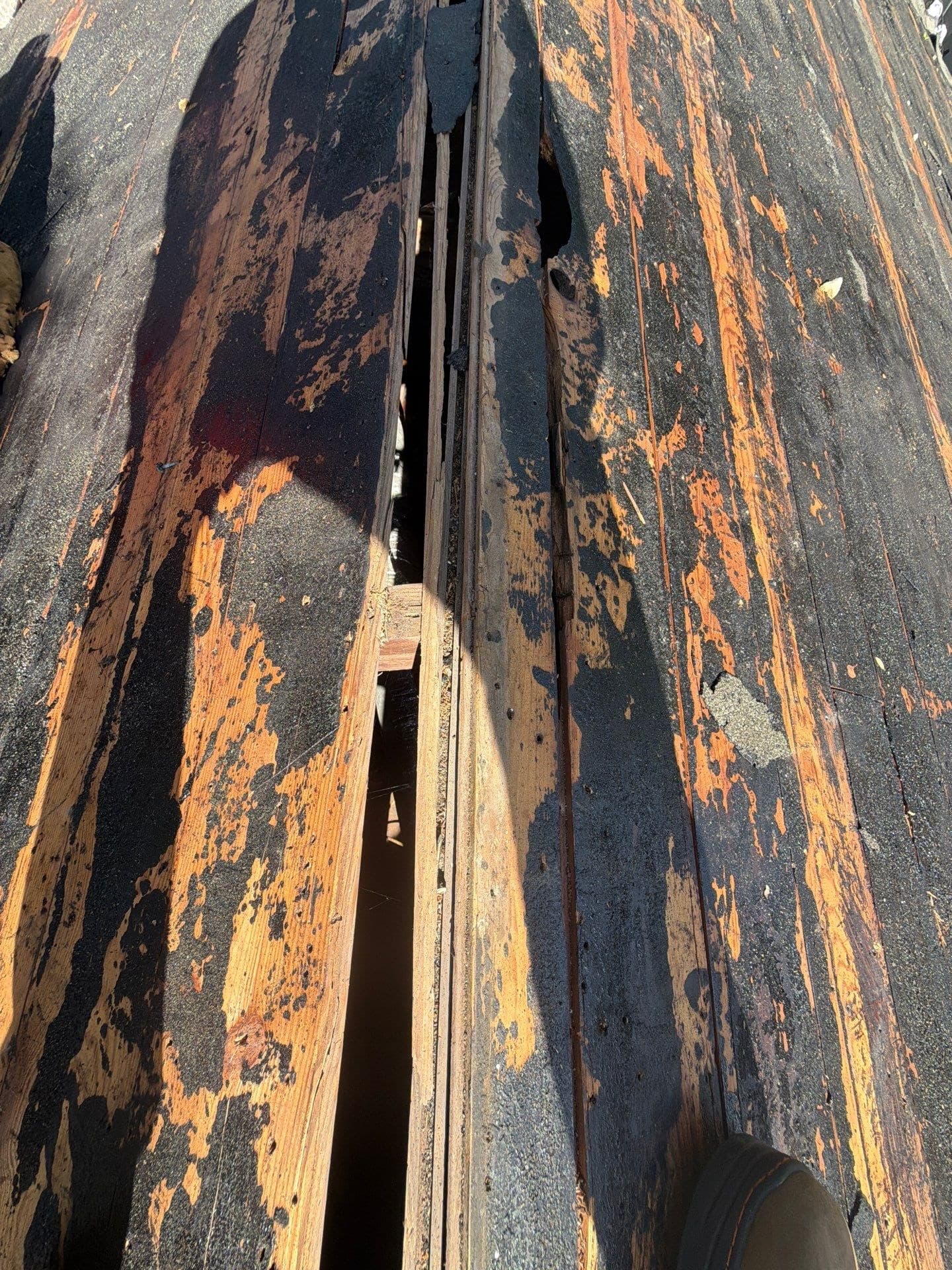
- DeckOnly visible once the old covering is off. Soft or delaminated sections have to be replaced. How that is priced is the question to ask.
- UnderlaymentThe actual water barrier. Which one, and how it is fastened, is rarely stated on a quote.
- CoveringThe part everyone shops on, and the last decision that gets made.
- VentilationIntake at the eave, exhaust at the ridge. Get this wrong and everything above it ages faster.
- FlashingEvery wall, valley and penetration. This is where roofs leak, and it is the first thing a cheap quote reuses instead of replacing.
Is it time?
Signs a replacement is worth evaluating
None of these means you need a new roof tomorrow. Together they mean the conversation is worth having while you still have the option of planning it.
The covering itself
- Granule loss over the whole roof, not just below one valley
- Cupping, curling or brittleness across the field rather than in one patch
- Repeated repairs, in a different place each time
- Previous work that used whatever shingle was available rather than a match
What's underneath and around it
- A deck that has been wet long enough to soften or delaminate
- Flashing that has been sealed and re-sealed instead of replaced
- Attic ventilation that was never adequate, shortening everything above it
- An underlayment that has reached the end of its service life, whatever the covering looks like
Your situation
- You are holding the property long term and would rather not pay twice
- You are selling, and the roof has become a negotiating point
- You would rather choose the material than take what is available in a hurry
- Insurance or financing has raised a question about the roof's condition
On a commercial building
- Wet insulation confirmed across a meaningful area, which a coating cannot fix
- Seams that have been patched repeatedly along the same runs
- Drainage that has never worked properly, so water sits after every rain
- A capital plan where deferring again costs more than acting now
Choosing a system
The building narrows the choice faster than preference does.
By the time those three are accounted for, most buildings have one or two sensible options rather than six. That is a much easier conversation than an open-ended one about materials.
What we will not do is publish a service-life figure for any of them. Real longevity depends on the material, the installation, exposure, ventilation and maintenance. A single number would be wrong for most buildings. Anyone quoting you one is guessing, however confidently.
- Geometry
- Complex, cut-up roofs with valleys and dormers favor shingle, which handles shape without custom fabrication. Long, simple planes favor metal.
- Exposure
- Near the water, salt drives the fastener and coating specification. Inland, thermal cycling and debris load matter more.
- Structure and horizon
- Tile is heavy, and the structure has to carry it. How long you are holding the property is a legitimate input, not a soft one.
Planning ahead
The best time to do this is before you have to
Replacing a roof under emergency conditions removes every option that makes the decision a good one. You take the material that is available, the schedule that is available, and the price that goes with both. You are also making a fifteen-year decision in a week.
Planning it while the roof is still doing its job means you choose the system deliberately, schedule around your own calendar or your tenants', and budget for it as a known number rather than an emergency. Our project and license record is there if you want to verify who you are planning it with.
If your roof is not leaking and you are wondering whether it is too early to ask, it is not. We would rather have this conversation now than later.
Questions
Replacement questions
What does a replacement actually include?
#Removing the existing covering down to the deck, inspecting and repairing the deck where needed, installing underlayment, replacing flashing at walls, valleys and penetrations, addressing ventilation, installing the new covering, and cleaning the site. Flashing and ventilation are the parts most often skipped by a cheap quote, and they are also the parts that determine whether the new roof performs.
What if you find rotten decking?
#Some deck damage is normal and is not always visible until the old covering is off, which is why an honest quote states how deck replacement is handled rather than pretending it will not come up. We show you what we find before we cover it, and you are told what it means for the scope.
How do I choose between shingle, metal and tile?
#It depends on the building more than on preference. Roof slope and geometry, how exposed the property is to wind and salt, what the structure can carry, how long you intend to hold the property, and how the roof needs to look all narrow the field quickly. Complex, cut-up roofs favor shingle. Simple, long roof planes and coastal exposure favor metal. Your specific roof gets a walk-through of those trade-offs, not a steer toward one answer.
How long will a new roof last?
#Anyone giving you a single number is guessing. Real service life depends on the material, the quality of the installation, how exposed the roof is, how well the attic is ventilated, and whether the roof is maintained. What we can tell you is what affects longevity on your specific roof, and what we will do about each of those things.
Are permits and inspections required?
#Roofing work in this area is permitted and inspected, and the requirements are set by the county or municipality your property sits in. Escambia, Santa Rosa and Okaloosa each administer their own. We confirm what applies to your address before the scope is finalized so there are no surprises mid-job.
My roof is not leaking yet. Is it too early to talk?
#Not at all. Planning a replacement while the roof is still doing its job means you can choose the material deliberately, schedule around your own calendar, and budget for it. Replacing a roof under emergency conditions removes all three of those options.
Find out where your roof stands.
An assessment gives you photographs, a condition report and a scope you can compare against anyone else's, whether or not you go ahead with us.
Or call us: (850) 361-9761