

System 01 · Residential & commercial
Metal Roofing
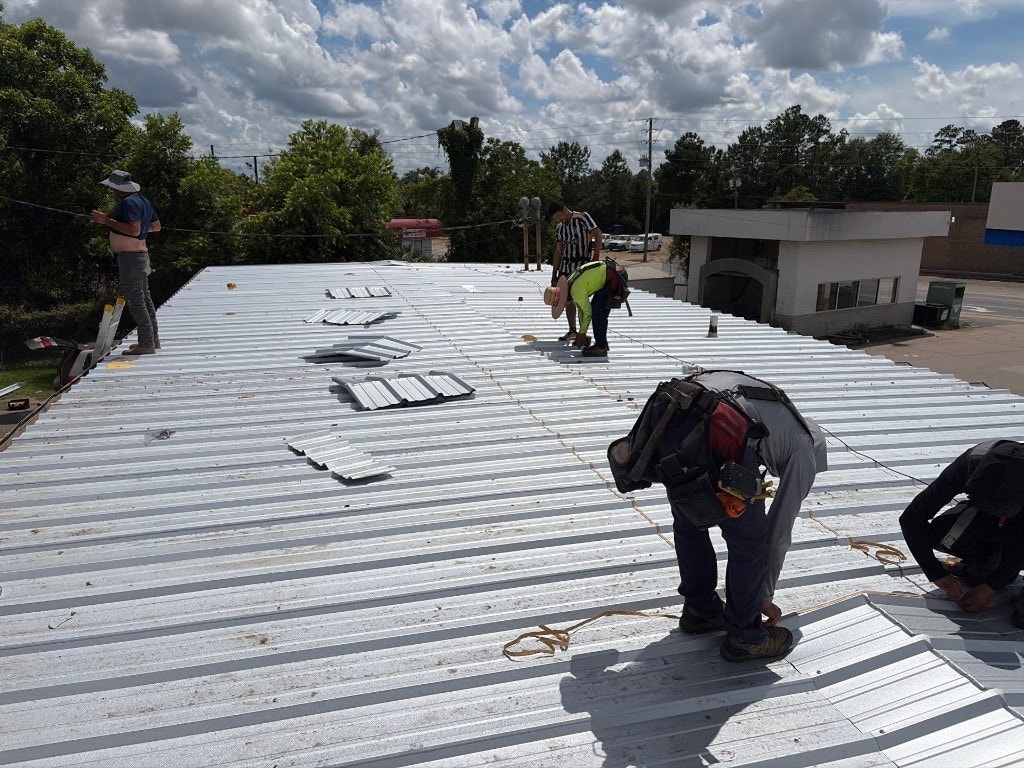
Standing seam and exposed-fastener panel systems, on both homes and commercial buildings. Common on coastal properties and on simple roof geometries where panel runs are long and uninterrupted.
For commercial property
Low-slope systems, leak investigation, planned maintenance and full replacement, scheduled around tenants, trading hours and access, and documented so it can be handed to someone else.
Who we work with
A commercial roof decision usually involves more than one person, and they rarely want the same outcome. Being explicit about that early prevents most of the friction.
| Role | Usually optimizing for | What that means in practice |
|---|---|---|
| Property managers | Optimizing forDefensible documentation and no surprises for the owner | You need a written condition record and a scope someone who was never on the roof can evaluate. We write it that way. |
| Building owners | Optimizing forCapital planning, not just this year's problem | Whether to repair, restore or replace changes depending on how long you are holding the asset. That is a legitimate input, and we will factor it in. |
| General contractors | Optimizing forSchedule reliability and clean coordination | Knowing when the roof is dried in and what we need from other trades matters more than a marginally lower number. |
| Developers | Optimizing forSystem selection that survives the warranty period | The specification decisions get made early, and they are difficult to revisit once the building is occupied. |
Leak investigation
Water that gets past a low-slope membrane does not fall straight down. It travels along the deck, along insulation joints and down structural steel until it finds a path through the ceiling. The stain inside marks the exit, and the entry point can be a considerable distance away.
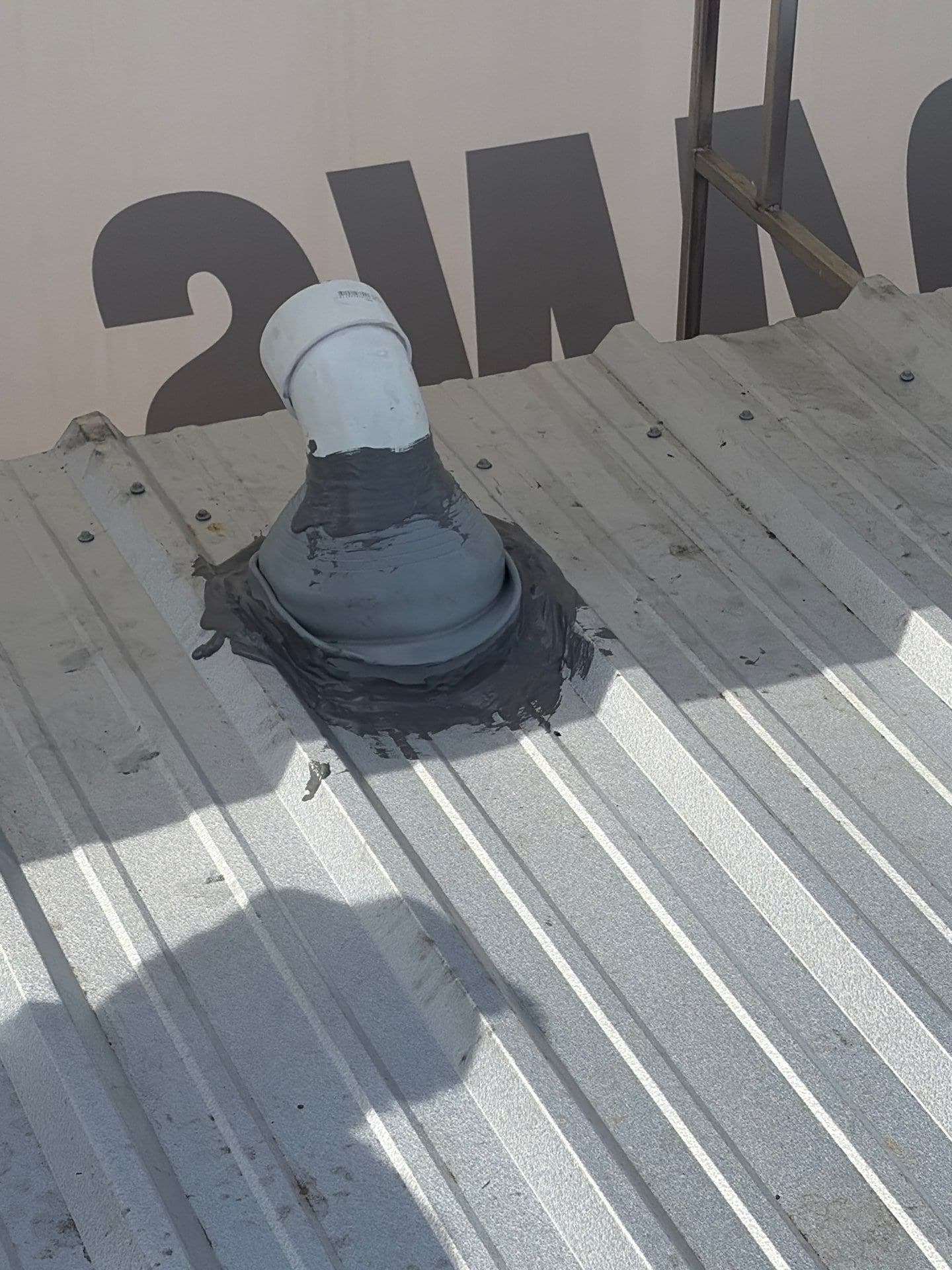
So investigation starts with the things that fail on these roofs: penetrations, curbs, drains, terminations and seams. Equipment added after the roof went on is a recurring culprit, because the person who set the unit was rarely the person responsible for flashing it.
What you get is the location, the cause and photographs. Not a recommendation to replace the whole roof because tracing the leak was inconvenient.
Low-slope systems
Membrane choice matters, but on a low-slope roof the detailing decides the outcome. A well-detailed modified bitumen roof outlives a poorly-detailed single-ply every time.
System 01 · Residential & commercial
Standing seam and exposed-fastener panel systems, on both homes and commercial buildings. Common on coastal properties and on simple roof geometries where panel runs are long and uninterrupted.
System 02 · Commercial
Heat-welded thermoplastic membrane on low-slope commercial roofs. Common on retail, office, light industrial and multi-tenant buildings.
System 03 · Commercial
Multi-ply asphaltic sheet systems on low-slope roofs, including smaller commercial buildings and the low-slope sections of otherwise sloped residential roofs.
System 04 · Commercial
Alternating layers of bitumen and reinforcing fabric, finished with gravel or a cap sheet. Found on many older low-slope commercial buildings in the area.
System 05 · Commercial
Fluid-applied coatings over an existing low-slope roof. A restoration approach, not a replacement, and only appropriate on a substrate that is sound.
The commercial question
The survey answers the technical half: what is wet, what is sound, and where the failures actually are. The other half is capital planning. Whether to repair, restore or replace changes with how long you are holding the asset, and that is a legitimate input, not a soft one.
What we will not do is skip the survey and quote the answer anyway. The roof has to be surveyed properly before anyone can tell you which of the three the building qualifies for.
Planned maintenance
Everything that goes wrong on these roofs is inspectable before it becomes an interior problem. That is not true of most building systems.
Working around you
Scheduling around occupancy is a normal part of commercial roofing, not a favor. Multi-tenant retail along the Fort Walton Beach and Cantonment corridors, offices with a fixed working day, light industrial with equipment on a duty cycle: each one changes the sequence of work.
On multi-tenant buildings we usually work through the property manager as a single point of contact and provide notice information you can pass on about access, noise and parking impact. Tell us the communication structure and we will work inside it rather than around it.
Where a constraint affects the timeline or the cost, you will hear that up front. A schedule that quietly ignores your operating hours is not a schedule, it is an argument scheduled for later.
And if the property is a house rather than an occupied building, the residential roofing page describes how the same assessment-first approach works for homeowners.
Questions
On a low-slope roof, water that gets past the membrane travels along the deck, along insulation joints, or down structural steel before it finds a way through the ceiling. The interior stain marks where the water exited, not where it entered. That is why leak investigation on a commercial roof starts with the penetrations, curbs, drains and terminations rather than the area directly above the stain.
Scheduling around occupancy is a normal part of commercial roofing and should be settled before the scope is finalized, not after. Tell us your constraints (trading hours, tenant access, deliveries, noise-sensitive areas, equipment that cannot be shut down) and we will build the sequence around them and tell you where a constraint will affect the timeline.
Photographs of what we found, a written description of the condition and its location, and a scope of work that states what is included. If you manage the property on behalf of an owner or a board, that record is what you need to justify the spend, so we write it to be read by someone who was not on the roof.
Low-slope roofs fail at their details (drains, penetrations, curbs, terminations and seams), and those are all things that can be inspected and corrected before water gets in. Keeping drains clear and catching a lifting seam early is materially cheaper than dealing with wet insulation and an interior repair. It also gives you a documented condition history, which matters when you are planning capital expenditure.
Sometimes, but not always, and it depends on what is under the coating. A fluid-applied coating can extend the service life of a roof that is watertight but weathering. It cannot fix wet insulation, failing seams or a saturated substrate. Applied over those, it traps the moisture and hides the problem. The roof has to be surveyed properly before anyone can tell you whether it qualifies.
Whoever you tell us to. On multi-tenant buildings we usually work through the property manager as the single point of contact, and we will provide notice information you can pass to tenants about access, noise and any parking impact. Tell us the communication structure up front and we will work inside it.
Send the address and what you are dealing with. If it is an active leak, say so, because that changes what we look at first.
Or call us: (850) 361-9761