Your Essential Post-Storm Roof Inspection Checklist
The wind has died down, the rain has stopped, and the sun is finally breaking through the clouds. After a storm rolls through the Panhandle, the first instinct for many homeowners is to assess the damage. Your roof is your home's primary shield against the elements, and checking its condition is a critical first step. But knowing what to look for can be overwhelming, especially when you're dealing with the stress of post-storm cleanup. At Omni Roof Systems, we're a local Pensacola company dedicated to our community's safety and peace of mind. We've created this essential checklist to help you safely and effectively assess your roof's condition after a storm.
Step 1: Safety First—What to Do Before You Inspect
Before you even think about your roof, your first priority is your safety. Never rush outside immediately after a storm. Take a moment to check for immediate hazards around your property.
- Look for Downed Power Lines: If you see any downed lines, stay far away and contact your utility company immediately. Never assume a line is dead.
- Check for Unstable Trees: Large branches or entire trees may be weakened and could fall. Be aware of your surroundings.
- Never Climb a Wet Roof: We cannot stress this enough. A wet roof is incredibly slippery and dangerous. All initial inspections should be done from the safety of the ground.
Your well-being is paramount. A professional is equipped with the right safety gear and training to handle on-roof inspections when the time is right.

Step 2: The Ground-Level Walkaround
You can learn a lot about your roof's health without ever leaving the ground. Grab a notepad or your phone and walk the perimeter of your home, looking for these tell-tale signs of storm damage:
- Shingles in Your Yard: This is the most obvious sign of damage. Finding even a few shingles on the ground means the integrity of your roof has been compromised.
- Dented Gutters and Downspouts: Hail and falling debris can leave significant dents. If your gutters are damaged, there's a high probability your roof is, too.
- Damaged Soffit or Fascia: Check the boards along your roofline. Wind can easily tear these materials loose, creating an entry point for water and pests.
- Granule Loss: Look for black, sand-like granules in your gutters or on the ground near your downspouts. These granules protect your shingles from UV rays, and significant loss can accelerate your roof's aging.
Step 3: Identifying Damage from a Distance
From a safe vantage point—like a second-story window or across the street—you can spot issues that might not be visible from directly below. Use binoculars if you have them.
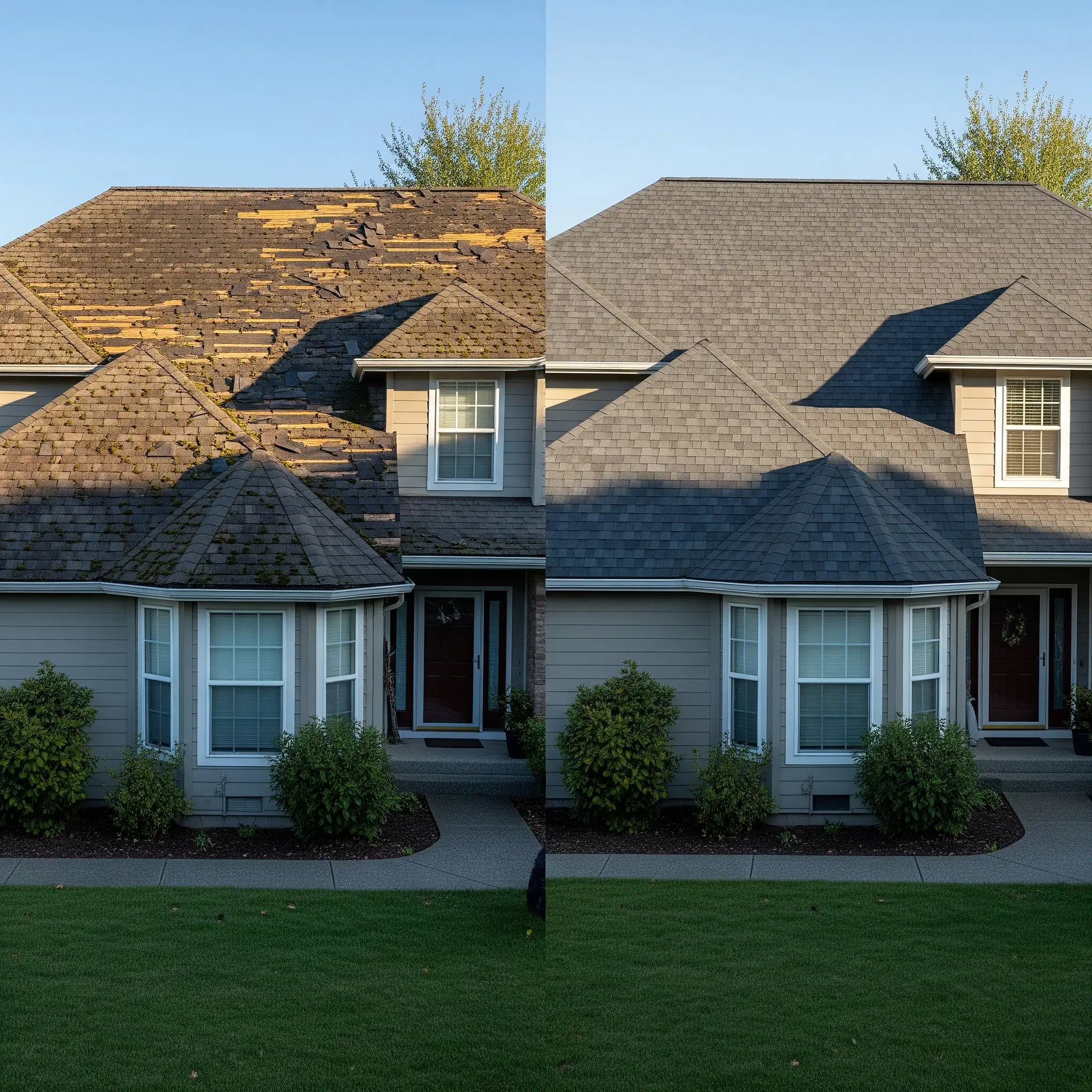
- Missing or Curled Shingles: Look for patches where shingles are completely gone or where the edges are curled up. This is often a sign of wind uplift, where the wind has broken the shingle's seal.
- Lifting or Peeling Shingles: Pay close attention to the edges and corners of the roof. Shingles that appear lifted are vulnerable to being torn off in the next gust of wind.
- Damage Around Vents and Chimneys: Check the flashing (the metal strips) around pipes, vents, and your chimney. If it's bent, loose, or missing, it's a major red flag for potential leaks.
- Bruising or Dents: On asphalt shingles, hail damage can look like dark bruises or circular patterns where the protective granules have been knocked off.
Step 4: Don't Forget the Attic and Interior
Not all storm damage is visible from the outside. Some of the most serious issues start from within. Once it's safe to do so, head into your attic with a flashlight.
- Look for Daylight: If you can see any slivers of light coming through the roof deck, you have a problem that needs immediate attention.
- Check for Water Stains: Scan the underside of the roof decking and the rafters for any signs of moisture, dark spots, or water stains.
- Inspect the Insulation: Look for areas where insulation appears wet, compressed, or moldy. A hidden leak can saturate insulation, reducing its effectiveness and leading to bigger problems.
- Check Interior Ceilings: After your attic check, walk through your home and look at the ceilings and walls for any new water spots or discoloration. A small spot on your ceiling could indicate a much larger issue above.
If you find evidence of a leak, a prompt roof repair can prevent minor damage from turning into a major structural problem.
Step 5: When to Call for a Professional Inspection
While this checklist is a great starting point, many types of storm damage are difficult to spot without a trained eye. After any significant weather event, a professional assessment is the best way to ensure your home is secure. Modern technology, like drone inspections, allows for a safe, fast, and incredibly detailed evaluation of your entire roofing system without anyone having to set foot on potentially compromised shingles.
A professional roof inspection provides:
- Safety: It keeps you off the roof and lets a trained expert handle the risk.
- Accuracy: We can identify subtle damage like hairline cracks and weakened seals that are precursors to major leaks.
- Insurance Documentation: We provide detailed reports and high-resolution images that are essential when filing an insurance claim for storm and wind damage repair.
Dealing with the aftermath of a storm is stressful enough. You shouldn't have to worry about untrustworthy 'storm chaser' contractors. Choosing a local, reputable company ensures you get reliable service and quality workmanship.
Your Partner in Post-Storm Recovery
After a storm, a thorough inspection is the most important thing you can do to protect your home and family. By following this checklist, you can get a clear initial picture of your roof's condition. Remember to prioritize safety, check from the ground up, and look for both obvious and hidden signs of damage.
If you've noticed any of the warning signs on this list or simply want the peace of mind that comes with a professional assessment, Omni Roof Systems is here to help. We provide comprehensive roof inspections for homeowners throughout the Pensacola area. Contact us today to schedule your no-obligation inspection and ensure your home is ready to weather the next storm. For urgent issues, we also offer emergency services to secure your property quickly. Contact us to get started.